
Fillmore County Court Docket Searches
Nebraska JUSTICE case information is where most Fillmore County docket searches begin. Have a party name or case number ready. The state system helps you separate a County Court matter from a District Court case. Before treating a result as the right Fillmore County court record, check it against the official return: court level, caption, case number, status, and date. That habit avoids chasing the wrong docket.
County Court is the usual first stop for traffic, misdemeanors, small claims, probate, juvenile matters, and ordinance cases. District Court handles felonies after bind-over, larger civil cases, domestic relations, equity, and protection orders. A federal case sits outside Nebraska JUSTICE entirely.
- Open the official JUSTICE service and accept its terms.
- Search the recorded party name, or use the complete case number when known.
- Narrow a broad result with Fillmore County, court type, year, subtype, judge, or attorney.
- Read the case summary before the register, then check the calendar for a current setting.
- Call the owning Fillmore County clerk for a date confirmation, copy, or restricted-record question.
Note: Spell the party name the way the record spells it. A witness name or a guess will pull the wrong Fillmore County court record.
Using Nebraska JUSTICE in Fillmore County
The JUSTICE public search works on a pay-per-search basis. Nebraska also sells subscriber access. It keeps a free public terminal at the courthouse. What comes back can include public case summaries, registers, calendars, and images. Images open to public viewing are part of that mix. It will not expose every item in a Fillmore County case file. New filings, image timing, confidentiality rules, and older paper files all shape the result.
A one-time public search costs $17. Returns cap at 30 cases, with a $2 charge for each detail. Annual subscriber access runs $100. Clerk copy and certification fees are separate. Knowing the numbers up front keeps you from paying for a broad result. You may find it is not the docket you need.
The official JUSTICE demonstration form lays out the fields available for narrowing a Fillmore County query. Each field helps sharpen the search.
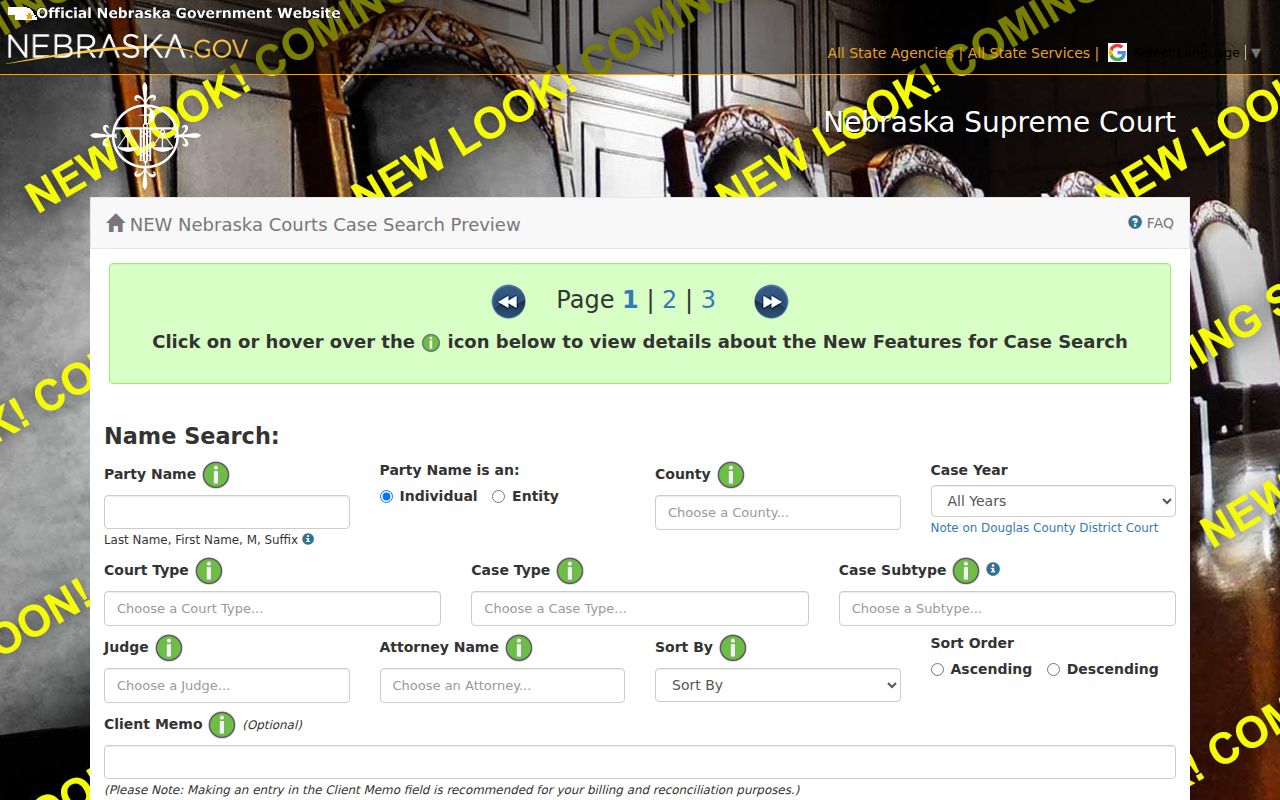
County, court type, and party or entity matter, since Fillmore County runs both county and district dockets.
| Search field | Use in Fillmore County | Important caution |
|---|---|---|
| Party or entity | Start with the exact party name, or select entity for an organization. | The portal format guidance uses last name, first name, middle initial, and suffix. |
| County and court | Select Fillmore, then County Court or District Court. | Traffic and probate do not route like district felonies or domestic cases. |
| Year and subtype | Use an approximate filing year and subtype when known. | A hearing year may not be the year the case opened. |
| Judge or attorney | Use only when named in a notice or court paper. | Judges can serve more than one county or division. |
Court Dockets: What They Show
A Fillmore County docket lists procedural events in the order they happened. It is not the whole case file, and it decides nothing about events outside court. Inside the register of actions you can find a case ID, caption, subtype, judge, filing date, service activity, hearing, order, judgment, or payment. Some entries carry a filing date. Others note a hearing or a payment. A bare "motion filed" line only reports a filing. It says nothing about the motion's legal basis or whether the court granted it.
The official JUSTICE public-search terms page spells out the conditions of a one-time public search. A state docket-detail demonstration then shows the difference between a case summary and the running register.
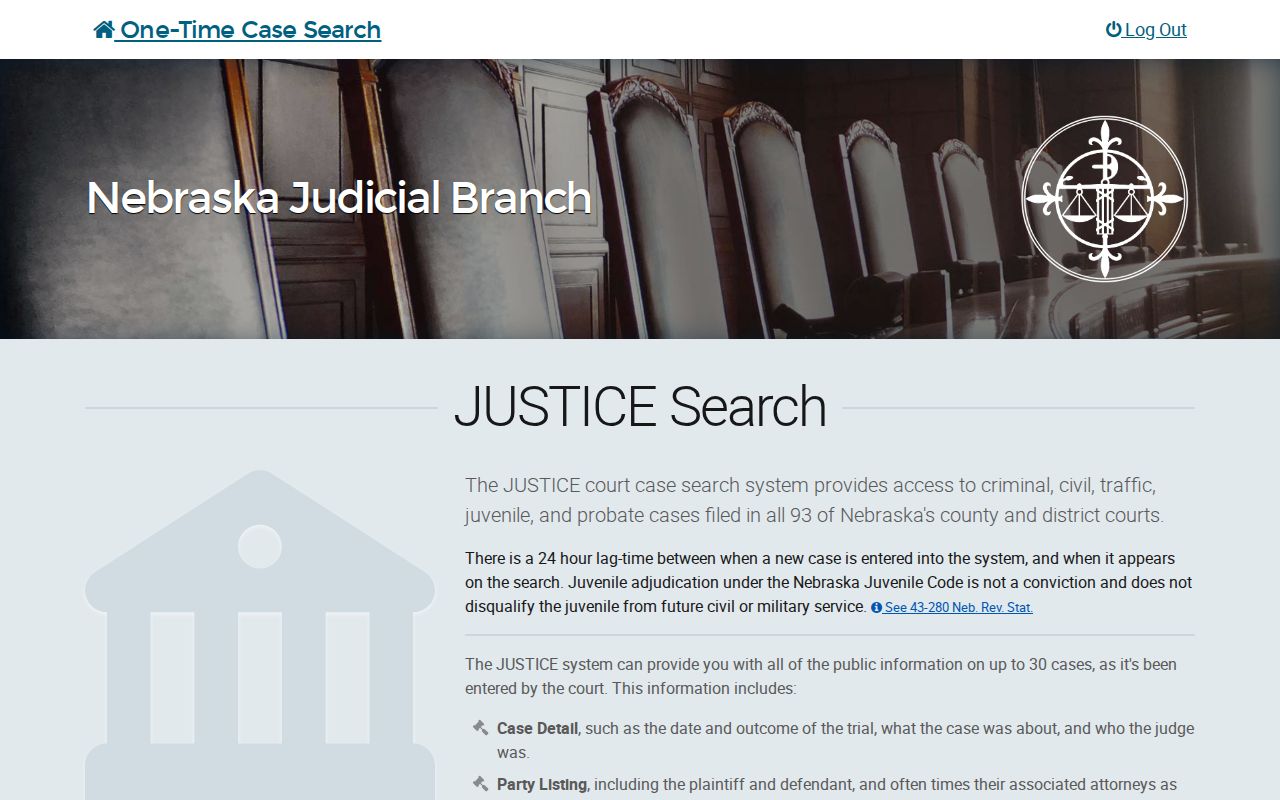
The search terms screen is a cue to identify the proper public record first. A paid one-time search works best that way.
| Case ID | The court-created identifier. Keep the full ID when contacting a Fillmore County clerk. |
|---|---|
| Caption and parties | The formal case title and recognized parties, not every person named in a filing. |
| Register of actions | The chronological log of docketed events, not the full case file. |
| Setting | A date, time, and location for a court event that may change by continuance. |
| Order or judgment | A court action that should be read in the actual public document when available. |
| Financial entry | A record of money received or disbursed, not proof of the full disposition. |
Fillmore County's Two-Court Hub
Both local trial-court offices sit inside the Fillmore County Courthouse at 900 G Street in Geneva. Shared walls do not mean shared files. The Fillmore County Court office keeps the county-level records. The district clerk keeps the District Court docket. Ask for the office that owns the caption.
The county court office sits on the second floor. Published courthouse hours run Monday through Friday, 8:00 a.m. to 4:30 p.m. The district clerk separately posts 8:00 a.m. to noon and 1:00 p.m. to 5:00 p.m. Call ahead for copies, filings, accommodations, or older records.
Fillmore County's official site names Geneva the county seat. It also marks the city as the local-office hub.
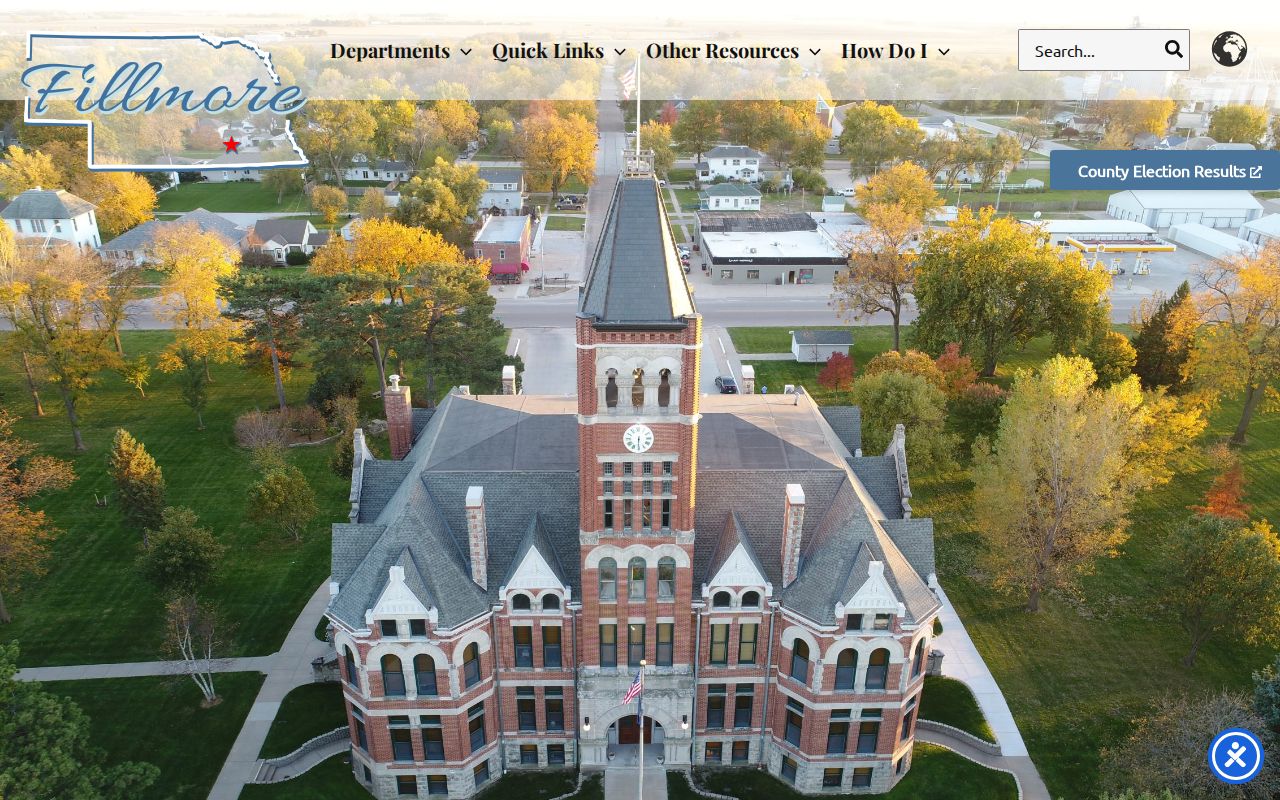
The county page helps route you to the right office. For a specific docket or file, the clerk and court pages remain the place to look.
Fillmore County Court
900 G Street, second floor
PO Box 66, Geneva, NE 68361
402-759-3514
Fillmore District Court Clerk
900 G Street
PO Box 147, Geneva, NE 68361
402-759-3811
Fillmore County Courts and Their Dockets
Picking the correct Fillmore County court avoids a common dead end. County Court takes traffic, infractions, misdemeanors, and small claims. It also covers probate, guardianship, conservatorship, adoption, most juvenile matters, and city or village ordinance violations. It also holds preliminary hearings on felonies. A felony can open with a county-court preliminary record. It may later proceed in District Court under a different case number. A closed county chapter does not end the felony.
The state directory for Fillmore County Court confirms the county-level court. The Fillmore District Court directory confirms the district route.
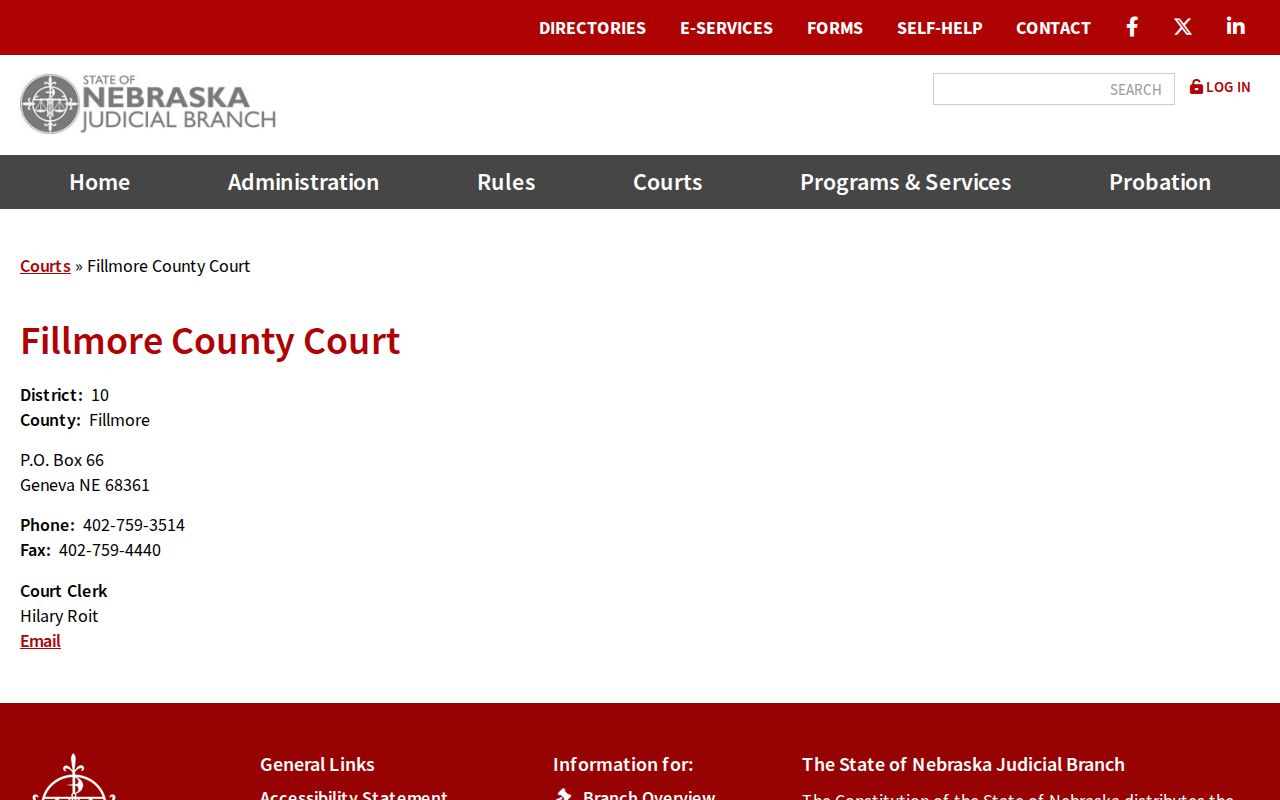
A directory names the court and the clerk. The caption and case number decide which record office should answer a request.
| Court | Docket covers | Where to search |
|---|---|---|
| Fillmore County Court | Traffic, misdemeanors, ordinance cases, small claims, probate, juvenile matters, and preliminary felony proceedings. | Nebraska JUSTICE, statewide calendar, county clerk magistrate, or courthouse terminal. |
| Fillmore District Court | Felonies after bind-over, larger civil matters, equity, domestic relations, protection orders, and county-court appeals. | Nebraska JUSTICE, statewide calendar, district clerk, or courthouse terminal. |
| Federal courts | Federal civil, criminal, and bankruptcy matters. | PACER, the federal clerk, or the federal voice case system, not Nebraska JUSTICE. |
Fillmore County Court Calendar Caution
Start with the Nebraska Multi-Court Case Calendar when you want a Fillmore County court date. You can search it by date or by last name. You pick County Court or District Court before choosing Fillmore. A last-name search needs at least two characters. Results may list a case number, caption, date, time, and location. One caution matters here. The calendar itself warns that an empty search does not prove there is no hearing.
Fillmore County Court holds regular court days on Wednesdays. Treat that as general orientation, not a schedule. A continuance can move a hearing while the case number stays the same. Labels like status hearing, pretrial, motion hearing, trial, sentencing, or review describe an event, not a result. For proof of an active setting, the register and the signed order carry the procedural record. The clerk remains the safest way to confirm a court date before you travel.
The county court's published information adds local detail. It includes court-day times and office contacts. The statewide calendar does not carry those.
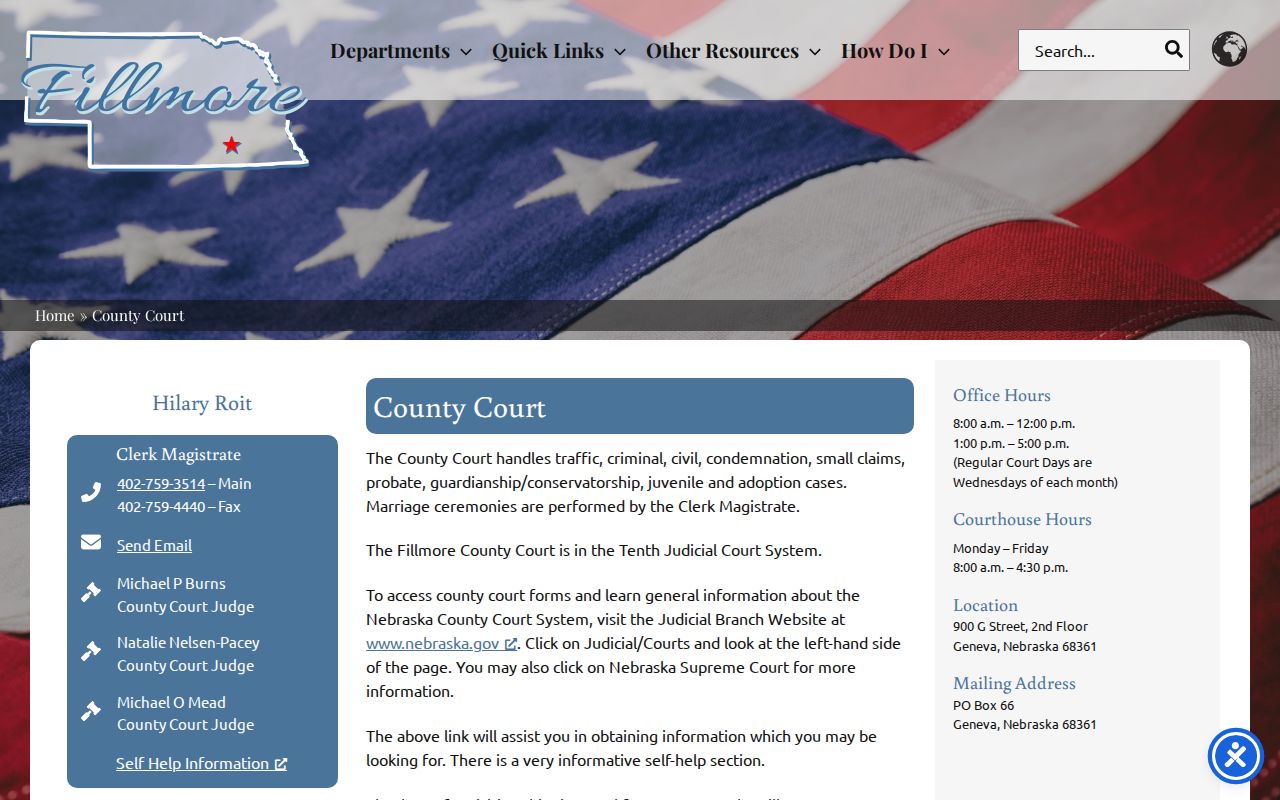
Confirm county-court settings by phone. For a District Court date, call the district clerk rather than trusting a static screen.
Docket Access Under Nebraska Law
Nebraska law opens Fillmore County court dockets to the public on two tracks. The Nebraska Public Records Act sets the baseline. Nebraska Supreme Court Rules, Chapter 1, Article 8 add court-specific terms. Article 8 promises every person equal access to the same case information. That access runs through the same court records. It also permits remote access through an authorized provider or a terminal at the courthouse. A rule, statute, or order can say otherwise. That is why an index, case summary, register, calendar, or available image can be public. A sealed document or a sensitive attachment stays closed.
The Nebraska JUSTICE case-information overview explains what the state system offers. For the fine print on accessible and excluded information, terminal access, remote access, and fees, read Article 8 itself on the Judicial Branch site.
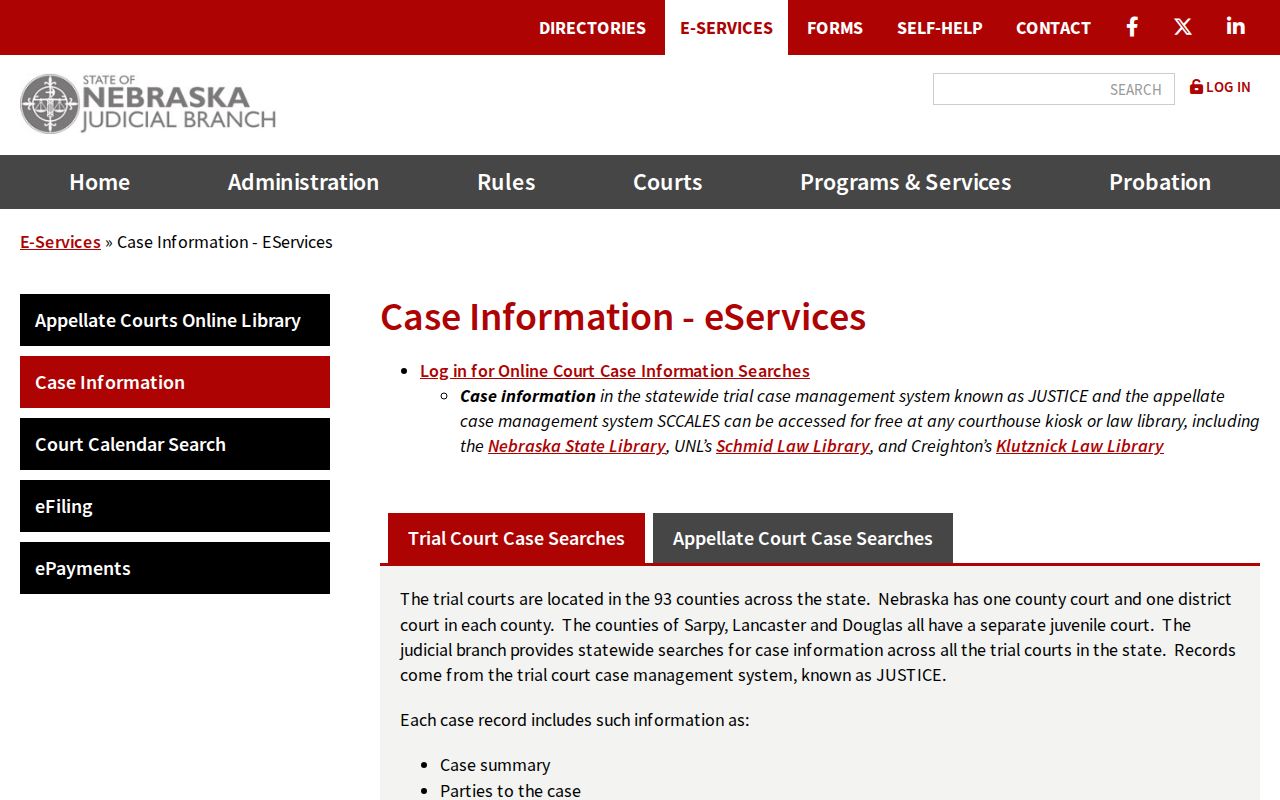
The state service is one authorized route to public court information, not the last word. If a Fillmore County docket search comes back thin, ask the clerk who holds the record before assuming nothing exists.
Key Rules:
Nebraska Public Records Act, Neb. Rev. Stat. §§84-712–84-712.09 provides the general request framework.
Neb. Rev. Stat. §84-712.05 lists permitted withholding categories and does not override court confidentiality rules.
Nebraska Supreme Court Rules, Chapter 1, Article 8 governs public court-record access, including terminal and remote-provider routes.
Rule §6-1523 identifies the district register, indexes, financial record, and case-file components.
Fillmore County Court Record Layers
Court records come in layers, so name the product you need when you request one. A search result only flags a possible case. A case summary adds basic fields, and the register lists events in order. A public image shows a specific filing or order. The full case file is held by the clerk. It may hold more on paper, microfilm, or electronically. Certified copies, authenticated copies, transcripts, and exhibits are separate products with their own access paths.
The Fillmore District Court directory lists the office's contacts and services. Nebraska's district-record rule spells out these layers and the official register.
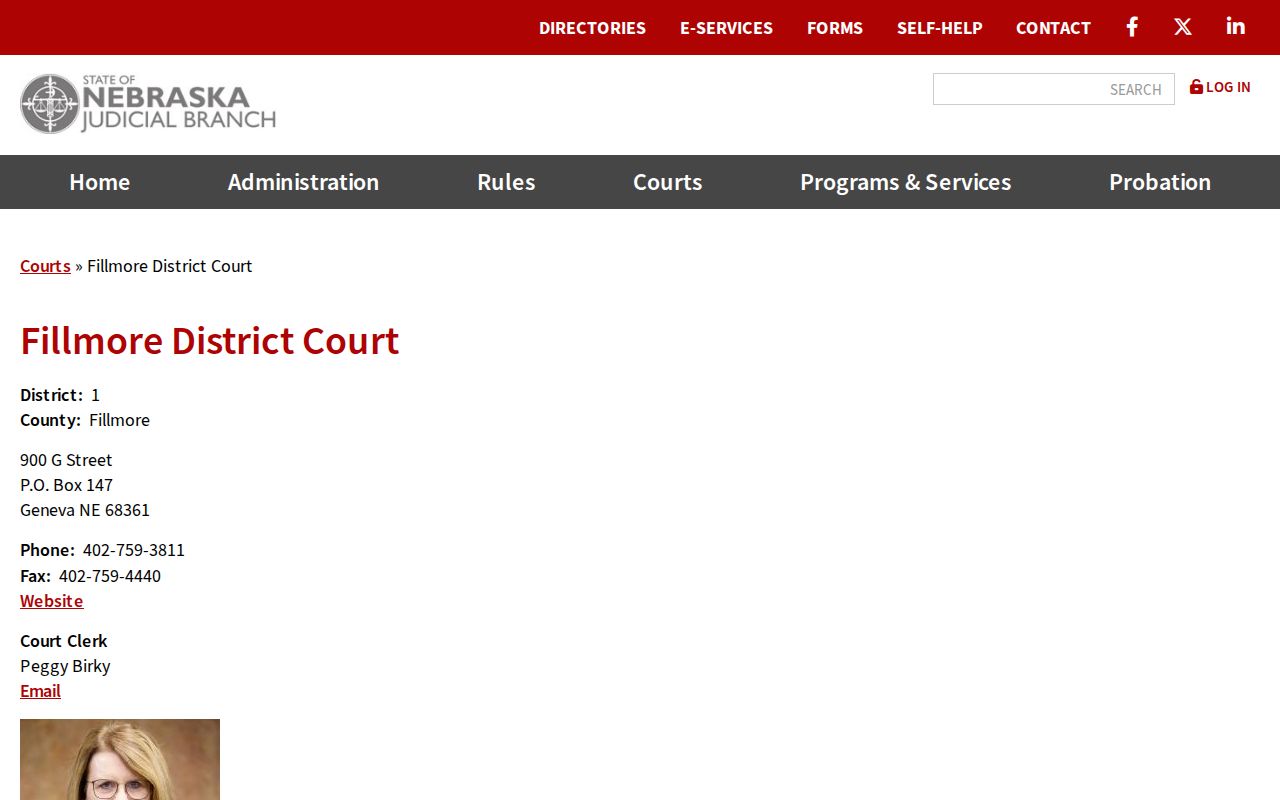
A Fillmore County search result will sometimes point to District Court rather than County Court. The court directory routes that request to the right office.
- Register of actions
- A chronological list of procedural events rather than the full case file.
- Continuance
- A postponement or rescheduling that does not itself decide the case.
- Certified copy
- A clerk-attested copy issued for an official purpose, with a separate certification or seal charge.
- Transcript
- A typed proceeding record that is different from a docket entry or audio recording.
Note: A public docket entry can stay visible even when the document, exhibit, or sensitive attachment behind it follows a narrower access rule.
Court Dates and Settings in Fillmore County
When a court date really matters, check a Fillmore County docket setting through more than one channel. Start with the case number or party name in the state calendar. Then call the right clerk. County Court answers at 402-759-3514. The District Court clerk is at 402-759-3811. The court-information specialist is listed at 888-342-6395. Both local offices share fax 402-759-4440, though a fax or mailed request should wait for clerk approval.
Some proceedings allow remote participation, but the court publishes no standing Fillmore-specific public remote link. Treat recordings with care. They are not automatically the official court record, and they can carry privacy limits. The statewide calendar also leaves out federal settings. Federal cases call for PACER, the federal clerk, or the federal Multi-Court Voice Case Information System.
For a specific date, the Fillmore County court schedule adds detail when the calendar route falls short.
Fillmore County Docket Search Costs
Fillmore County docket costs are not one flat fee. Search charges, detail charges, copy fees, certification fees, and filing fees each stand alone. The JUSTICE one-time service prices its search and detail levels separately. For an old case or a common party name, a public terminal or a focused clerk inquiry may cost less than a broad search. Once the case turns up, watch the copy type. An ordinary copy and a clerk-certified copy carry different price tags. Mailing, deposits, authentication, and special reproduction can add more.
The Fillmore district clerk page shows the local office's services. Nebraska's filing-fee and court-cost schedule sets the framework that applies. The official invoice form goes with it.
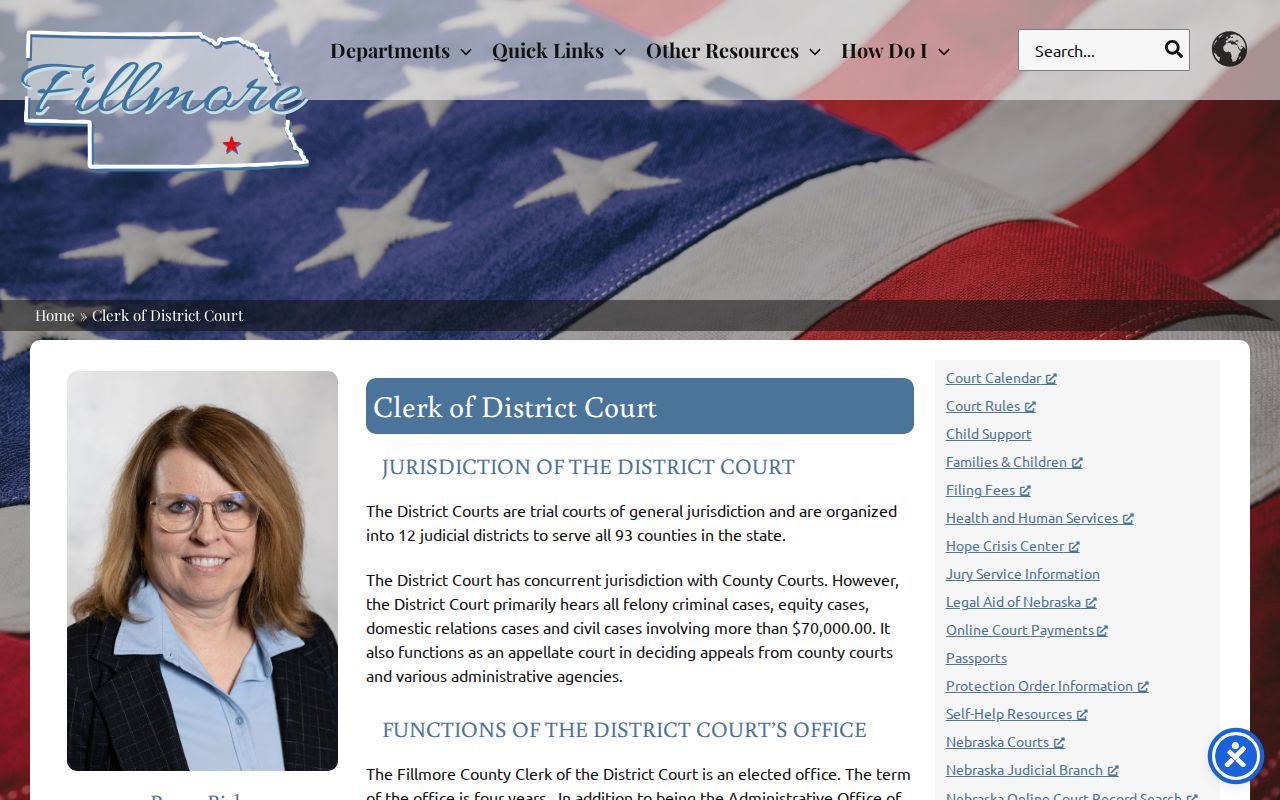
Once a Fillmore County search points to District Court, route copy questions there. The district clerk holds the district record and confirms what a copy request needs.
| Product | Current research detail | Confirm with |
|---|---|---|
| JUSTICE one-time search | $17 public search, subject to the portal's terms and result cap. | Official JUSTICE service. |
| JUSTICE detail | $2 under current state information. | Official JUSTICE service. |
| Subscriber service | $100 annually under current state information. | Nebraska subscriber service. |
| Ordinary copy | $0.25 per page in the state schedule. | Owning Fillmore County clerk. |
| Seal or certification | $1 per seal or certification in the state schedule. | Owning Fillmore County clerk. |
How the Clerk Keeps Docket Records
Two offices split the docket work in Fillmore County. District Clerk Peggy Birky maintains the Fillmore District Court's records across criminal, civil, and mental-health cases, plus judgments, writs, orders, filings, service, costs, fees, fines, and restitution. Clerk Magistrate Hilary Roit handles the county-court side: the register, traffic tickets, ordinance and misdemeanor matters, small claims, probate, guardianship, adoption, juvenile cases, and preliminary-felony records. Neither office plays lawyer. The clerk keeps and certifies records. The office will not give legal advice, predict a ruling, or tell a nonparty what a docket entry means.
The Nebraska District Court overview describes the statewide system. The district clerk's official page covers the local role, and the Judicial Branch announcement names the current county clerk magistrate.
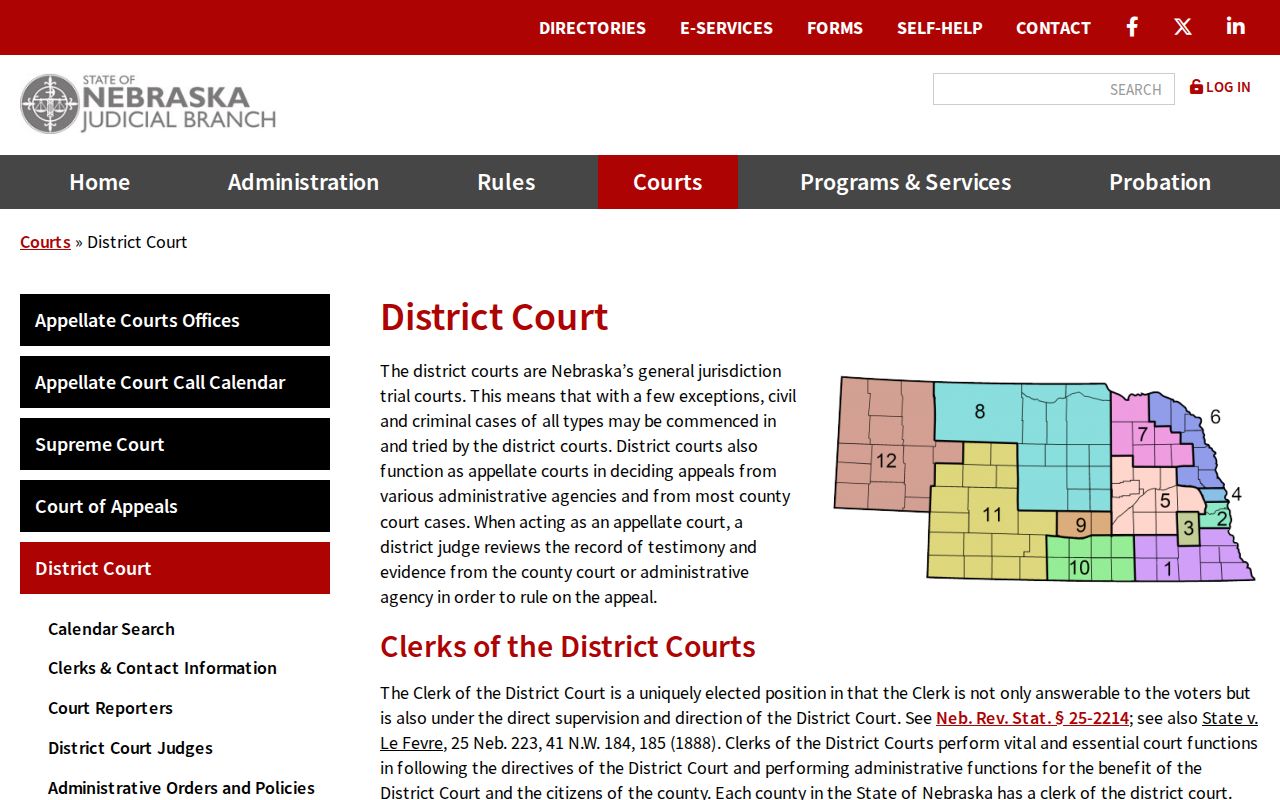
Check the statewide overview before sending a request. It helps you tell a District Court record from a county-court record.
Fillmore County Docket History
Fillmore County's record trail runs deep. Geneva's official county history places the courthouse completion in 1894 at the town square. A community clock was added in 1909. Today's docket workflow pairs that building with electronic JUSTICE records, public terminals, scanned images, and clerk-held paper or microfilm. Do not assume the electronic age scanned every old filing. Nor is every available file viewable from afar.
The Nebraska County Court overview explains the state's county-court system, and Geneva's Fillmore County history page tells the story behind the county's record hub.
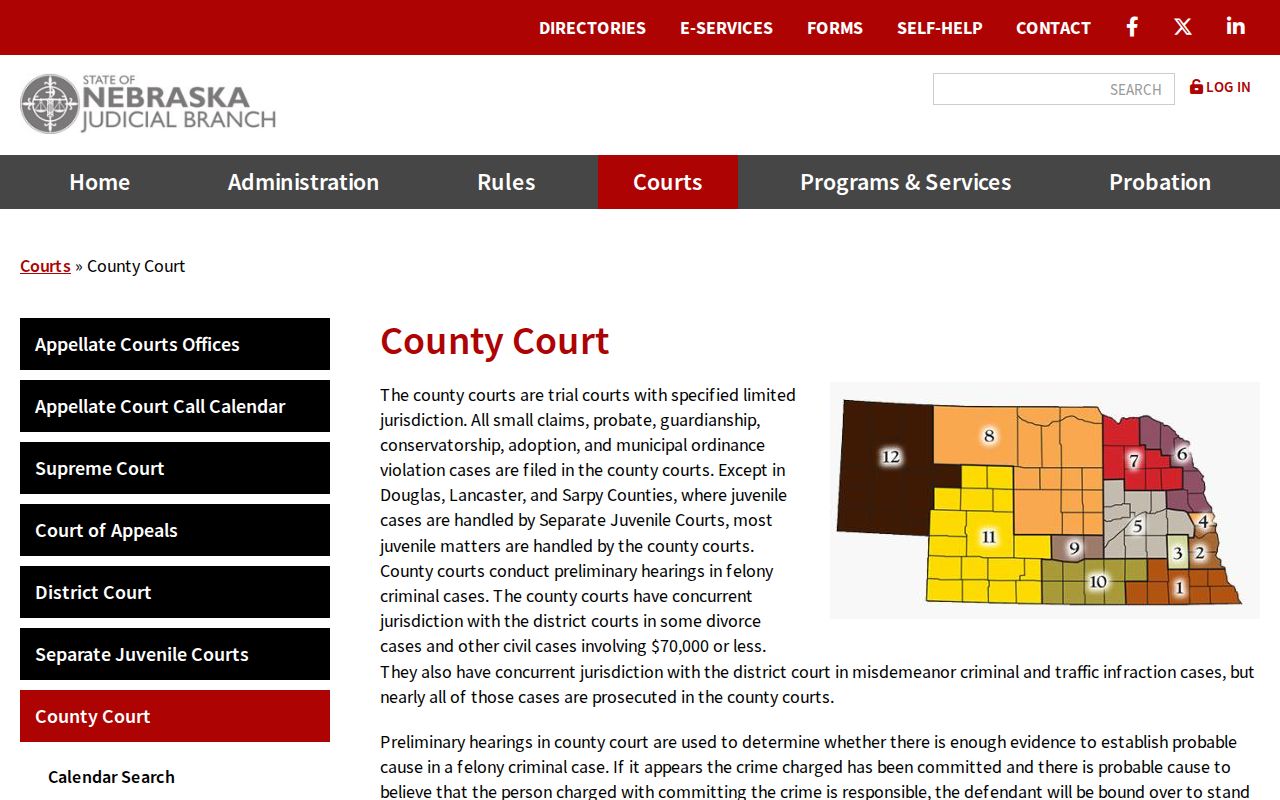
The county-court system gives the public an electronic starting point for Fillmore County records. The clerk still answers for file availability and copies.
Fillmore County District Caseload Context
The Judicial Branch counts its work in fiscal years. Fillmore District Court filed 96 adult district cases between July 1, 2024 and June 30, 2025, according to the FY2025 caseload report. The local slice breaks down further. Fillmore County logged 26 protection-order filings, 19 civil filings, and 3 domestic-relations filings in that stretch. Criminal filings add 3 Felony 1 cases and 18 Other Criminal cases. Read those numbers as volume, nothing more. They count filings, not people. They also say nothing about outcomes or about how many matters will surface in a Fillmore County court docket search.
The official FY2025 district-caseload report holds the Fillmore County figures.
For a specific case, skip the statistics. Nebraska JUSTICE, the court calendar, and the clerk who holds the file remain the real routes to a Fillmore County docket.
City-by-City Court Dockets in Fillmore County
Fillmore County's five largest incorporated places, by 2020 Census count, are Geneva, Fairmont, Exeter, Shickley, and Milligan. None of the five runs its own municipal docket portal. The public court-record path for all of them leads back to Fillmore County Court and Nebraska JUSTICE. That is how Nebraska law sets it up. County courts hold original jurisdiction over city and village ordinance violations and over traffic matters. A city name still has its use. It can help you spot a citation on the docket. It can also point you to the right local contact. For any Fillmore County case lookup, one place matters: the county court docket is where the record lives.
Geneva Court Records
Population 2,136 in the 2020 Census. Geneva is the county seat and courthouse hub.
Fairmont Court Records
Population 592 in the 2020 Census. Village code questions still route court records to County Court.
Exeter Court Records
Population 523 in the 2020 Census. Local administration and court-record custody are different roles.
Shickley Court Records
Population 347 in the 2020 Census. Use Fillmore County and County Court in the state search.
Milligan Court Records
Population 244 in the 2020 Census. County Court is the first docket contact for traffic and ordinance matters.
Map and Directions to the Fillmore County Courthouse
Fillmore County Court and Fillmore District Court both operate from the Fillmore County Courthouse, 900 G Street on Geneva's town square. The county-court clerk magistrate's office is on the second floor and handles traffic, misdemeanors, small claims, guardianships, and probate, while the district-court clerk keeps felonies, divorces, and larger civil disputes. The 1894 courthouse building still carries its 1909 community clock.
Fillmore County Court
900 G Street, second floor
Geneva, NE 68361
402-759-3514
Monday through Friday, 8:00 a.m. to 4:30 p.m.
Fillmore District Court Clerk
900 G Street
Geneva, NE 68361
402-759-3811
Monday through Friday, 8:00 a.m. to noon and 1:00 to 5:00 p.m.
General courthouse hours run 8:00 a.m. to 4:30 p.m., Monday through Friday, but the district clerk's own office hours are 8:00 a.m. to noon and 1:00 to 5:00 p.m., so call ahead if the exact counter hours matter. Ask for the county-court clerk magistrate or the district clerk by name rather than just "the docket," since record ownership follows the case's court type.